
|
Fly awayLast plane for summer leaves McMurdo on March 6Posted March 9, 2012
;)
Photo Credit: Melanie Miller
The last U.S. Air Force C-17 for the 2011-12 summer field season sits at Pegasus airfield.
A Royal New Zealand Air Force |



For USAP Participants |
For The Public |
For Researchers and EducatorsContact UsNational Science FoundationOffice of Polar Programs Geosciences Directorate 2415 Eisenhower Avenue, Suite W7100 Alexandria, VA 22314 Sign up for the NSF Office of Polar Programs newsletter and events. Feedback Form |
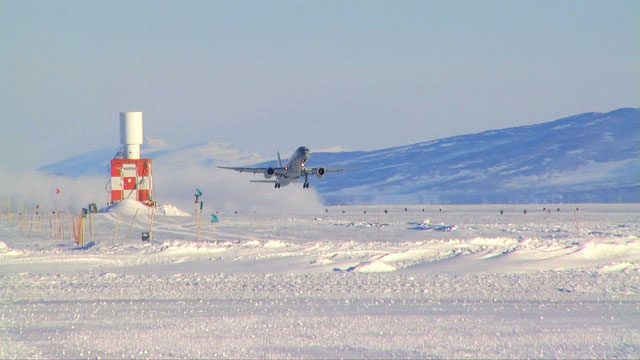
 B757, above, departed
  shortly after 6 p.m. on March 6, bringing the 2011-12 summer field season to an end. The United States shares logistical support for its Antarctic research program with New Zealand and has a base of operations in the South Island city of Christchurch. The winter crew includes 153 people, who will maintain operations through the six months of darkness and cold, until flights resume around mid-August. The last